Digital Marketing vs Traditional Marketing: Which Works Better for Local Businesses and Agencies?
Many local businesses and service-based agencies still depend heavily on traditional marketing—newspaper ads, flyers, hoardings, or radio promotions—without realizing how much qualified traffic, measurable leads, and revenue they are missing.
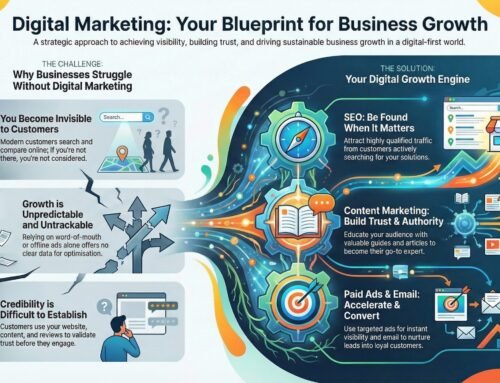
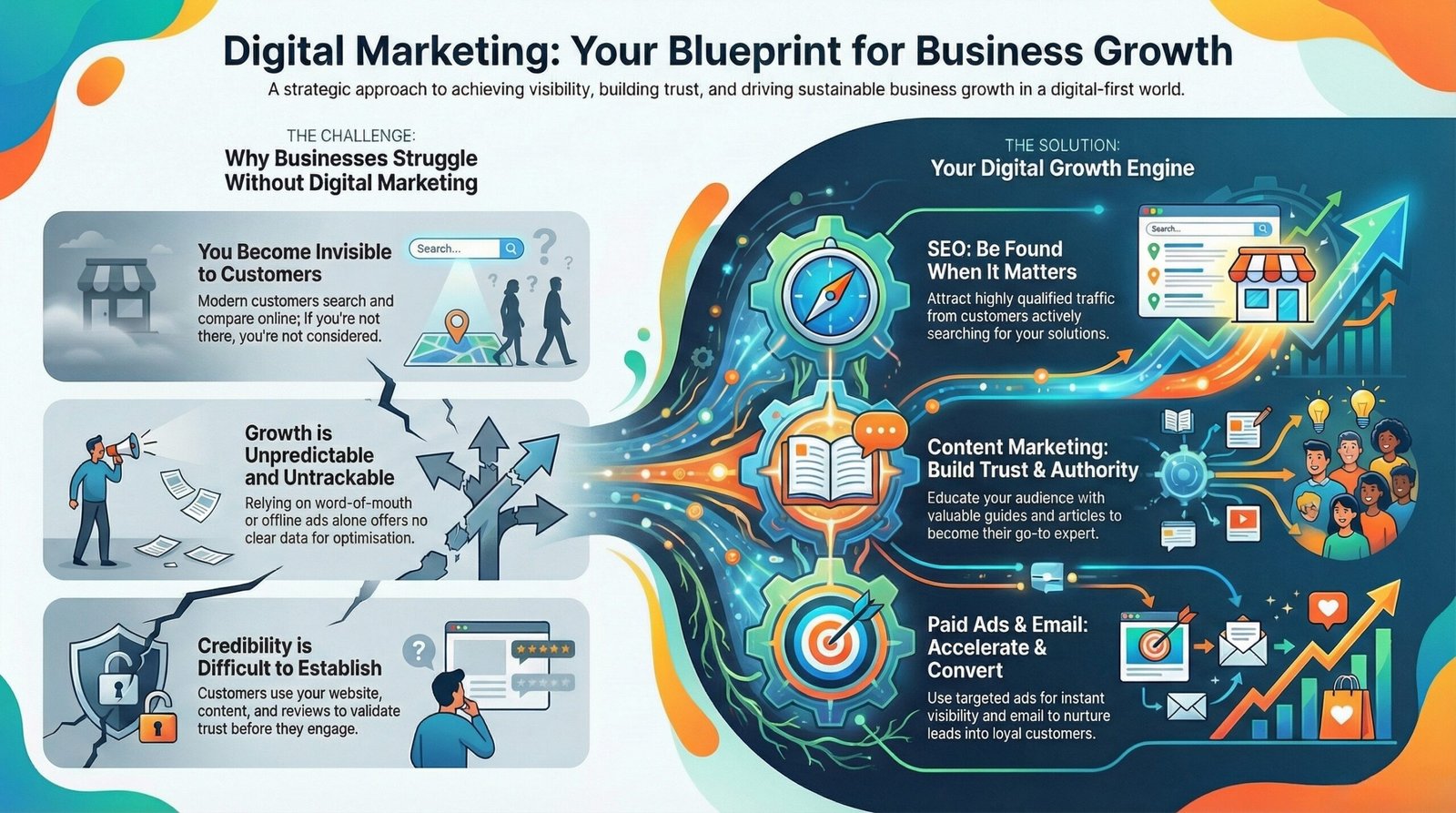
The way customers discover and choose businesses has changed completely. Today, people search on Google, read reviews, compare options online, and make decisions before ever calling or visiting a business.
This is why understanding digital marketing vs traditional marketing is critical for local businesses and agencies that want consistent growth rather than unpredictable results.
Digital Marketing vs Traditional Marketing: A Clear Comparison
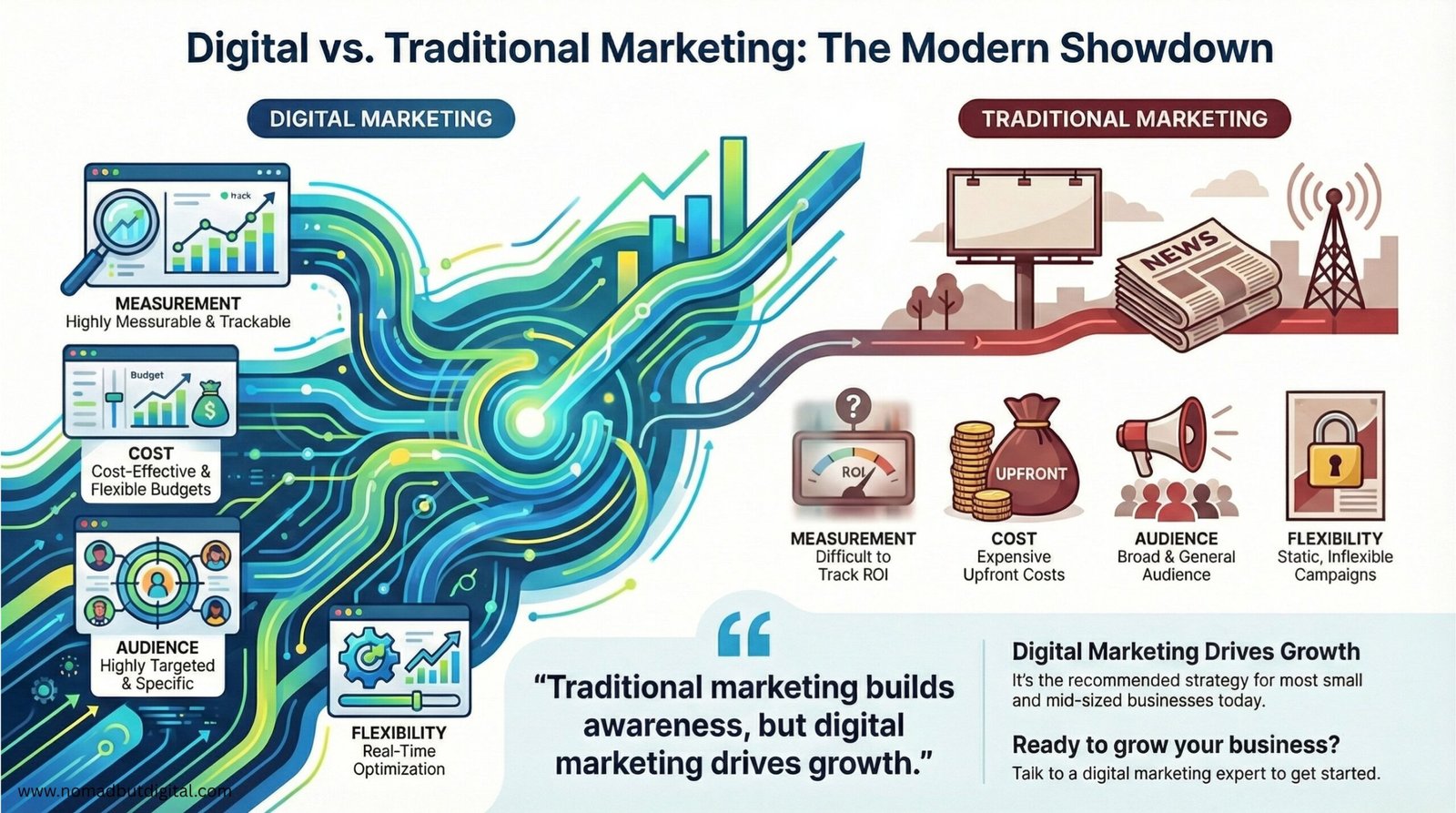
At its core, the difference between digital and traditional marketing is not just about platforms—it’s about control, precision, and results.
Digital marketing allows local businesses and agencies to attract customers through Google search, local SEO, paid ads, social media, email marketing, and content. It meets customers exactly when they are actively searching for services.
Traditional marketing relies on offline exposure such as print ads, billboards, TV, radio, or flyers. While it may create brand visibility, it operates on one-way communication with limited feedback or tracking.
For modern businesses, the deciding factors are measurability, cost efficiency, targeting accuracy, and ROI.
Measurability: Why Data Matters for Local Businesses
One of the strongest advantages of digital marketing is complete transparency.
With digital marketing, local businesses can clearly see:
- How many people visited their website
- Which ads generated calls or form submissions
- Which keywords brought high-intent leads
- How much each lead or conversion cost
This makes optimization straightforward and growth predictable.
Traditional marketing offers little to no measurable data. A newspaper ad or billboard might reach thousands, but you can’t track how many people actually took action. For small businesses with limited budgets, this lack of clarity often leads to wasted spend.
📌 Featured Snippet Tip:
Digital marketing is measurable, while traditional marketing relies on estimates.
Cost Comparison: Digital Marketing vs Traditional Marketing
For local businesses and agencies, budget flexibility is crucial.
Digital marketing allows you to start small, test strategies, and scale only what works. Whether it’s Google Ads for local searches or SEO-driven content, businesses can control daily spend and pause campaigns instantly if needed.
Traditional marketing usually requires high upfront costs with no guarantee of results. Printing flyers, booking radio slots, or running newspaper ads involves fixed expenses that cannot be optimized once launched.
📌 Featured Snippet Tip:
Digital marketing is cost-effective and scalable, while traditional marketing requires heavy upfront investment.
Audience Targeting: Precision That Converts
Targeting the right audience is what separates marketing spend from marketing investment.
Digital marketing enables local businesses to reach people based on location, search intent, demographics, interests, and behavior. For example, a local agency can target users searching for “digital marketing services near me” or “SEO agency in [city].”
Traditional marketing targets a broad audience, most of whom may not need your services. This reduces relevance and lowers conversion rates.
📌 Key Insight:
Relevance drives conversions—not reach.
Real-Time Optimization vs Static Campaigns
Digital marketing campaigns are dynamic. Ads, landing pages, and messaging can be optimized in real time based on performance data. This allows agencies and businesses to continuously improve results.
Traditional marketing campaigns are static. Once launched, there is no scope for improvement. If a campaign fails, the budget is already spent.
For local businesses operating in competitive markets, adaptability is non-negotiable.
ROI Comparison: Which Delivers Better Returns?
When comparing ROI, digital marketing consistently outperforms traditional marketing.
With digital marketing:
- Every lead is tracked
- Cost per lead is measurable
- Campaigns can be refined for higher profitability
Traditional marketing may build awareness, but linking spend directly to revenue is difficult. This makes long-term scaling unreliable.
📌 Featured Snippet Tip:
Digital marketing delivers higher ROI because performance can be tracked and optimized.
Which Marketing Strategy Is Better for Local Businesses and Agencies?
For most local businesses, service providers, and marketing agencies, digital marketing works better.
Customers today actively search for solutions online. If your business doesn’t appear on Google, Maps, or social platforms, you lose high-intent leads to competitors who do.
Traditional marketing can support brand awareness, but relying on it alone limits growth in a digital-first economy.
Final Verdict: Digital Marketing vs Traditional Marketing
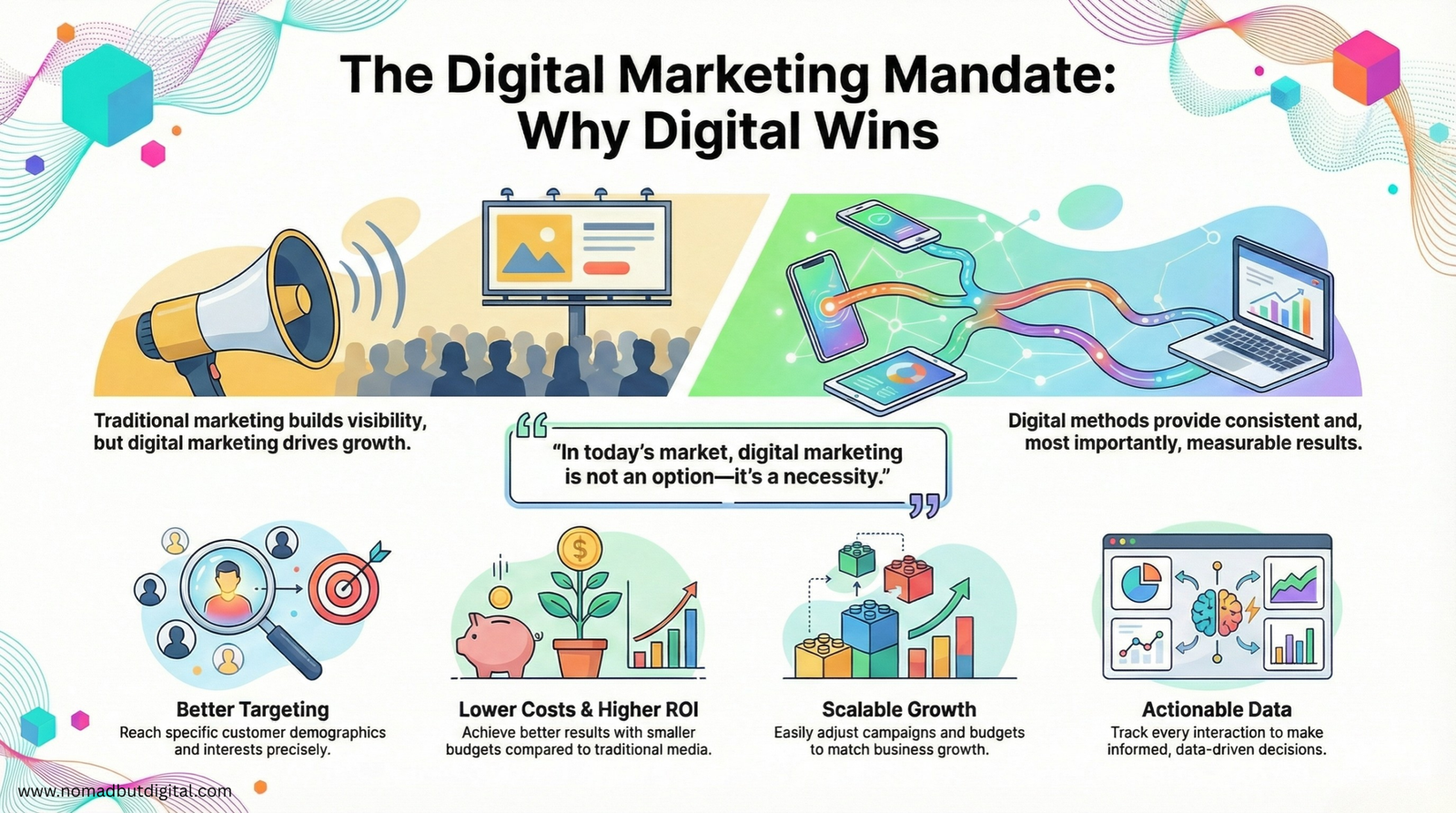
Traditional marketing helps with visibility, but digital marketing drives consistent, measurable growth.
For local businesses and agencies, digital marketing offers:
- Better targeting
- Lower costs
- Higher ROI
- Scalable growth
- Actionable data
In today’s market, digital marketing is not an option—it’s a necessity.
Want more local leads, better conversions, and predictable growth?
Talk to a digital marketing expert and book your discovery call today.