How Digital Marketing Helps Small Businesses Grow
What Is Digital Marketing for Small Businesses?
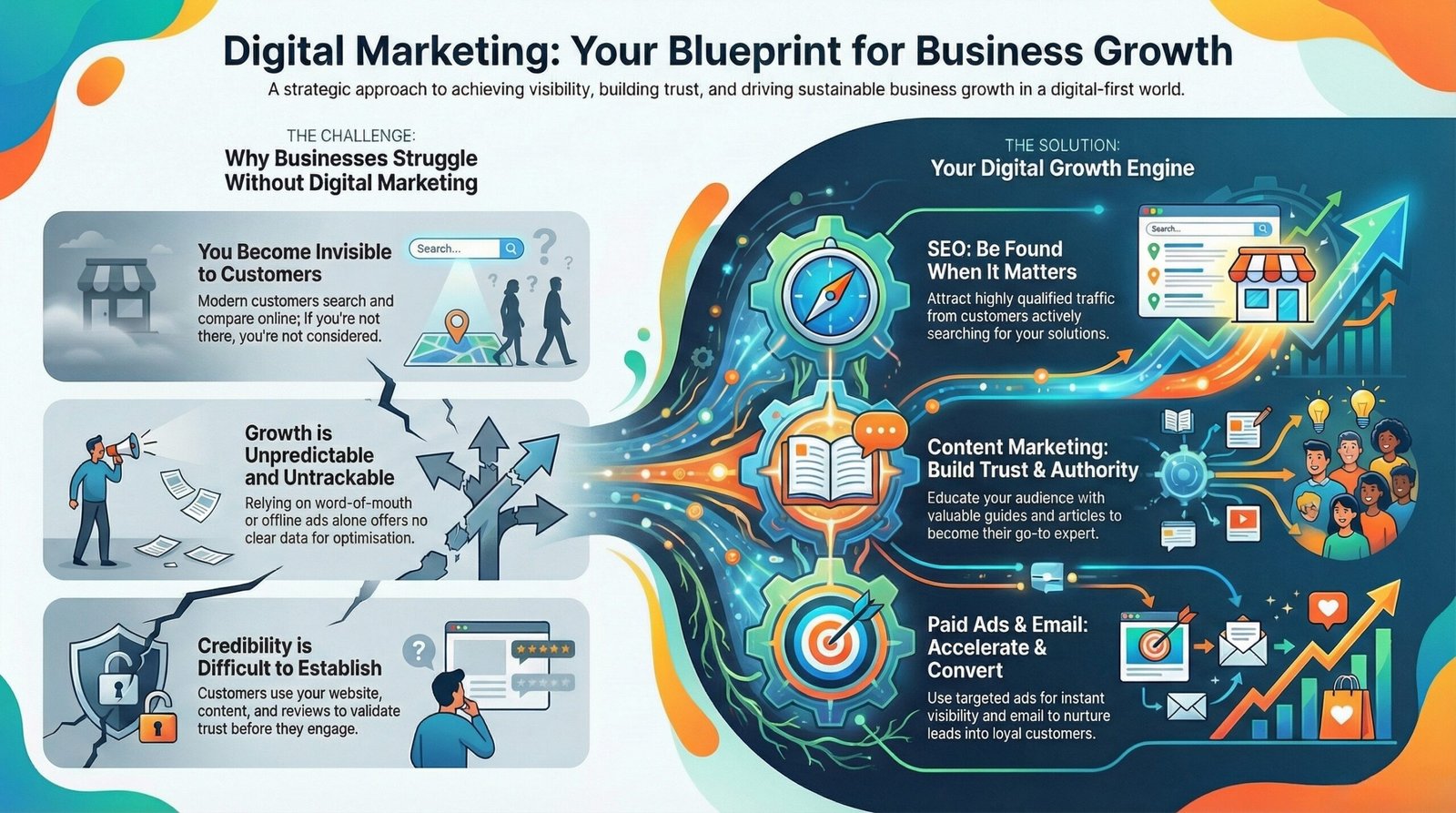
Digital marketing for small businesses is the strategic use of online channels—search engines, content, social platforms, and paid advertising—to capture existing customer demand, convert attention into measurable revenue, and build sustainable long-term growth without relying on large marketing budgets.
At its core, digital marketing is not about tactics. It is about alignment between customer intent, visibility, and trust.
Introduction
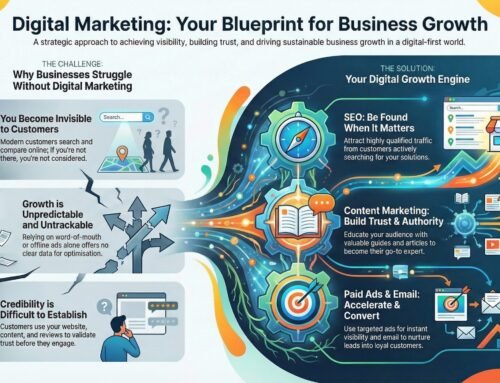
Most small businesses do not struggle because their offerings are weak. They struggle because potential customers do not discover them at the right time. Traditional marketing focuses on broad exposure, hoping the right person sees the message. Digital marketing works differently. It focuses on being present precisely when customers are searching, comparing, and ready to decide.
This fundamental difference is why digital marketing for small businesses has become essential rather than optional. When implemented correctly, it turns growth from something unpredictable into something structured, measurable, and scalable.
Why Digital Marketing Works Better for Small Businesses
Small businesses operate with constraints—limited budgets, small teams, and little room for error. Digital marketing works within these constraints because it is intent-driven and data-led.
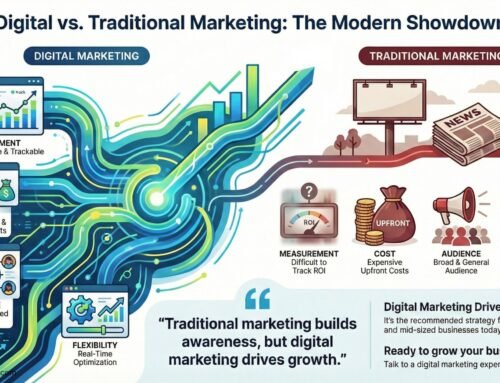
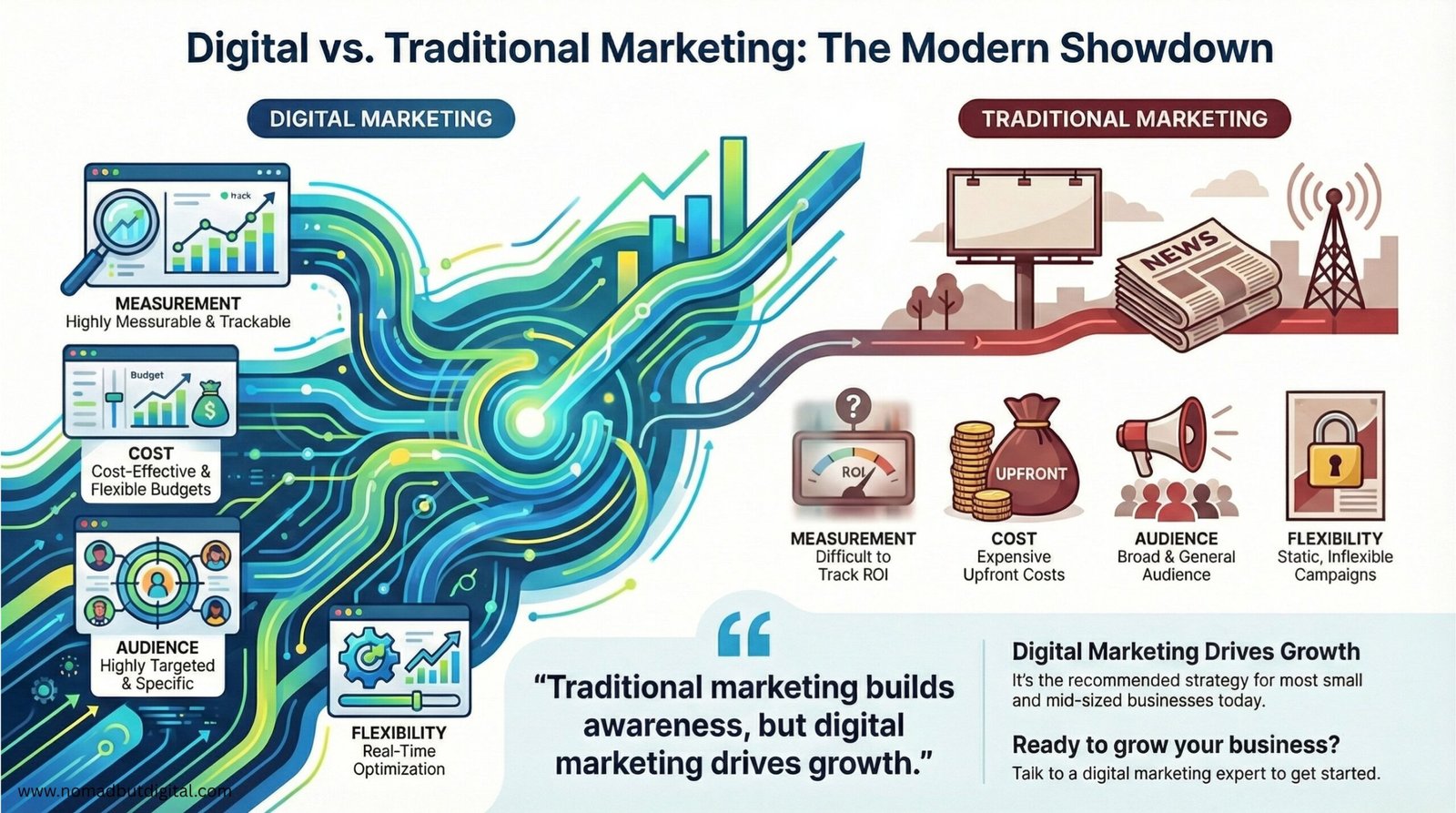
Instead of paying to interrupt audiences who may not need your service, digital marketing allows businesses to intercept demand that already exists. Search engines, local listings, and targeted advertising surface your business to users actively looking for solutions. This is the key reason digital marketing consistently outperforms traditional marketing in ROI comparisons, especially for small and mid-sized businesses.
The ability to measure performance in real time further strengthens this advantage. Every visit, inquiry, and conversion can be tracked, analyzed, and optimized. This feedback loop allows small businesses to improve efficiency continuously rather than relying on assumptions.
The Financial Advantage: Smarter Spend, Higher Returns
Digital marketing is often described as “affordable,” but affordability is only part of the story. The real advantage lies in capital efficiency.
Because campaigns can be adjusted instantly, small businesses avoid long-term commitments to underperforming channels. Budgets can be shifted toward what generates results, and underperforming strategies can be paused without financial loss. Over time, this leads to lower customer acquisition costs and better profit margins.
This level of financial control is rarely possible with traditional advertising and is one of the primary reasons digital marketing supports sustainable growth.
Local SEO: The Most Powerful Growth Lever for Small Businesses
For most small businesses, growth is driven by local demand. Local SEO ensures that your business appears when customers search for services in their area. Unlike awareness-based marketing, local SEO targets users with immediate intent, making it one of the highest-converting digital channels available.
When local SEO is executed properly, it becomes a consistent source of inquiries, calls, and visits. It also builds credibility, as customers naturally trust businesses that appear prominently in local search results. Over time, this visibility compounds, delivering ongoing results without proportional increases in marketing spend.
Targeted Reach That Improves Lead Quality
One of the most overlooked benefits of digital marketing is lead quality improvement. Small businesses often believe they need more leads, when in reality they need better ones.
Digital marketing allows precise targeting based on location, behavior, and search intent. This ensures that marketing efforts reach people who are far more likely to convert. The result is fewer wasted conversations, higher close rates, and better use of internal resources.
This shift from volume to relevance is a critical turning point for many growing businesses.
Content Marketing as a Trust-Building Mechanism
Content marketing plays a strategic role beyond SEO rankings. High-quality content educates potential customers before they ever make contact. It answers questions, addresses concerns, and reduces hesitation.
For small businesses, this pre-qualification process is invaluable. By the time a prospect reaches out, trust has already been established. Content also strengthens other digital channels by improving conversion rates and supporting search visibility, making it a cornerstone of long-term growth.
Social Media as Brand Validation
Social media marketing is often misunderstood by small businesses. Its primary role is not immediate lead generation but credibility reinforcement.
Customers frequently check social profiles to validate a business before making contact. A consistent, professional presence builds confidence and supports conversions across search, ads, and referrals. When aligned with a broader digital strategy, social media becomes a trust amplifier rather than a distraction.
Google Ads for Strategic Acceleration
Paid advertising offers immediacy, which is valuable when launching services, entering new markets, or testing demand. However, for small businesses, Google Ads work best when layered on top of strong foundations such as local SEO and optimized landing pages.
Used strategically, paid campaigns accelerate growth without creating dependency. They provide data insights that inform long-term SEO and content decisions, strengthening the entire digital ecosystem.
Measurability That Enables Smarter Growth Decisions
Perhaps the most transformative aspect of digital marketing is visibility into performance. Small businesses gain access to insights that were once available only to large enterprises.
Understanding which channels drive revenue, which pages convert, and where prospects drop off allows owners to make informed decisions. Marketing becomes a predictable system rather than an expense, enabling confident planning and scalable growth.
The Real Impact of Digital Marketing on Small Businesses
When digital marketing is executed as a system rather than a collection of tactics, small businesses experience a fundamental shift. Lead flow becomes more consistent. Customer acquisition costs decrease over time. Brand authority strengthens naturally.
Most importantly, growth becomes intentional rather than reactive. This is where digital marketing transitions from a marketing function to a business growth engine.
Conclusion
Digital marketing is not about chasing trends or platforms. It is about creating alignment between visibility, intent, and trust.
For small businesses, digital marketing for small businesses offers the most practical, measurable, and scalable path to growth. It allows brands to compete on strategy rather than spend, turning limitations into advantages.
Ready to Build Sustainable Growth for Your Business?
👉 Get a free digital marketing audit today
Receive a clear, expert-driven roadmap tailored to your market, goals, and growth stage.