Complete Guide to Digital Marketing for Business Growth
Introduction: Why Digital Marketing Is No Longer Optional
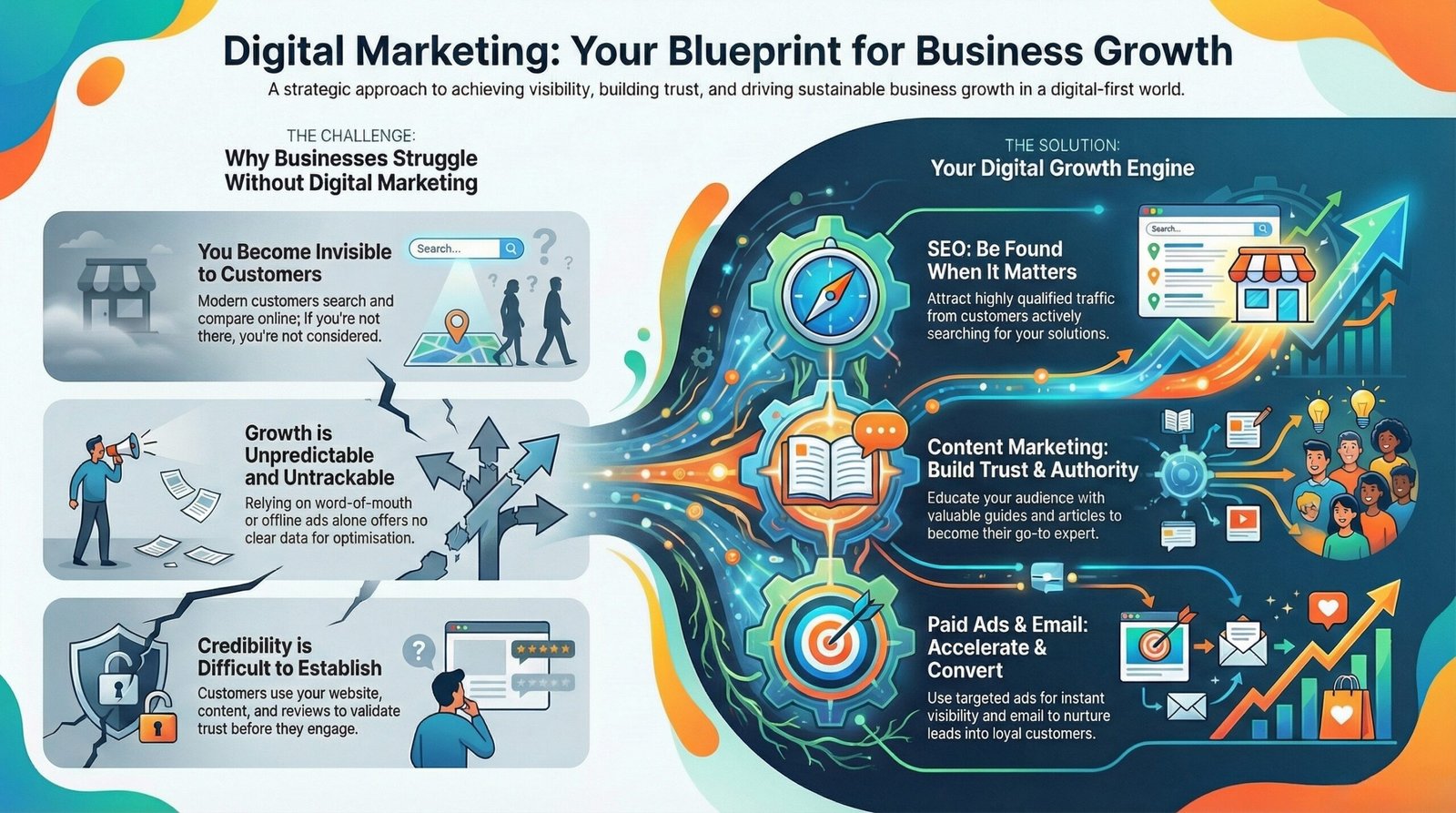
Let’s be real for a moment. Trying to grow a business today without digital marketing is like trying to navigate a new city without Google Maps—you might eventually get somewhere, but you’ll waste time, money, and energy along the way. The marketplace has shifted, and customer behavior has evolved faster than most businesses expected.
Modern customers don’t wait to be sold to. They search. They scroll. They compare. They read reviews, explore websites, and form opinions long before they ever reach out to a business. If your brand doesn’t show up during that journey, it doesn’t matter how good your product or service is—you simply won’t be considered.
This is why digital marketing for business growth is no longer optional. It’s not just another marketing channel; it’s the backbone of visibility, credibility, and predictable revenue in a digital-first world. Word-of-mouth alone doesn’t scale. Offline advertising doesn’t answer questions. And guesswork doesn’t build sustainable growth.
Digital marketing creates a system—one that attracts the right people, builds trust over time, and converts attention into action. When done correctly, it removes uncertainty and replaces it with clarity and control.
In this guide, you’ll gain a clear understanding of what digital marketing really is, why it’s essential for business growth marketing, and how to build a strategy that generates consistent leads and long-term revenue without feeling overwhelming.
What Is Digital Marketing? A Modern Definition for Businesses
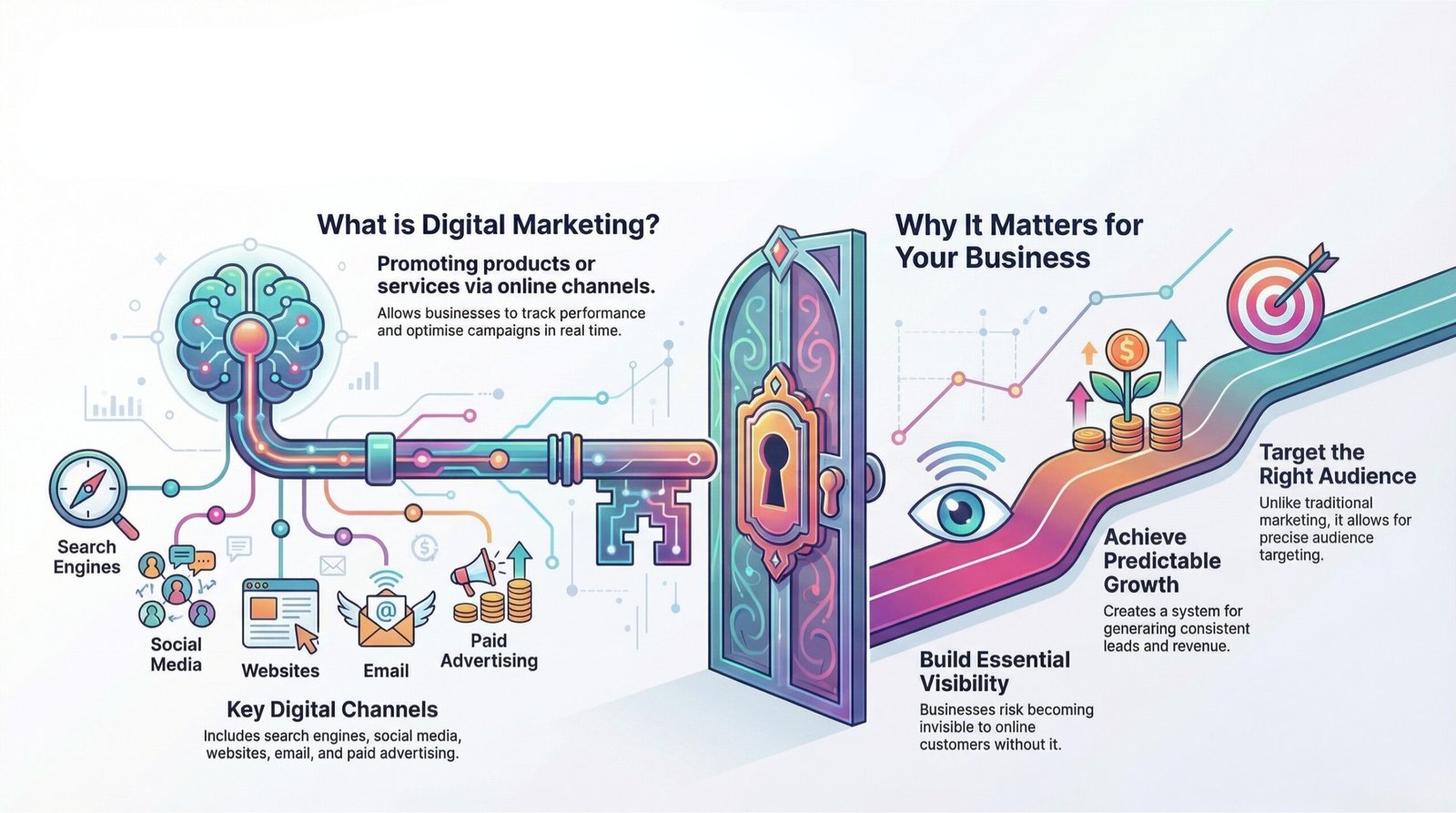
At its simplest, digital marketing refers to promoting products or services through online channels such as search engines, websites, social media platforms, email, and paid advertising. But for businesses focused on growth, digital marketing is far more than promotion—it’s a strategic framework for reaching customers at the exact moment they’re looking for solutions.
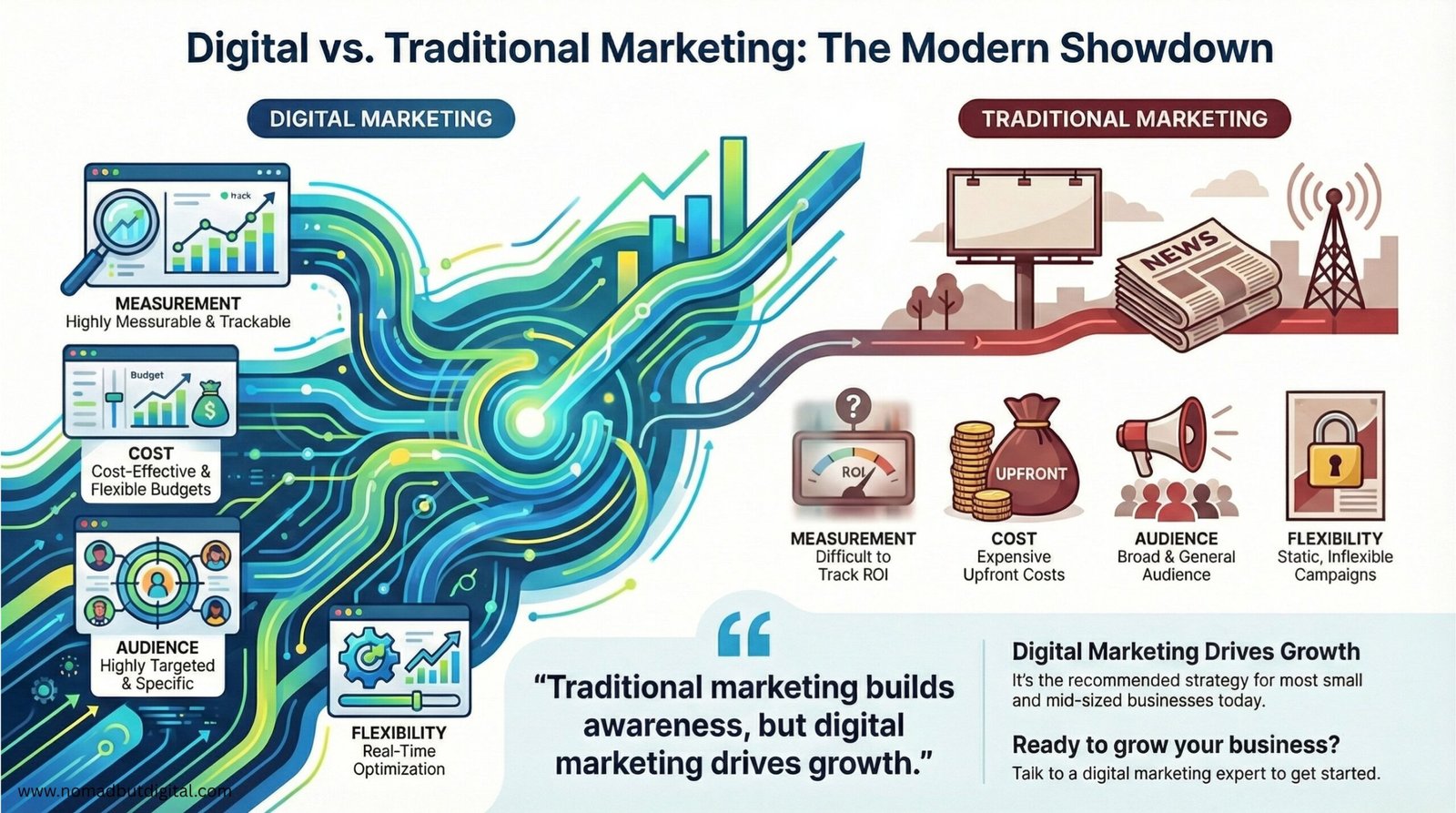
Unlike traditional marketing, which relies on broadcasting messages to large audiences and hoping the right people pay attention, online marketing is intent-driven. It allows businesses to appear when customers are actively searching, researching, or comparing options. This alone makes digital marketing incredibly powerful.
Another defining feature is measurability. Digital marketing provides visibility into what’s actually happening behind the scenes. You can see how people find your business, what content they engage with, where they drop off, and what ultimately leads to conversions. This data-driven insight allows continuous optimization instead of blind spending.
Digital marketing also works as an ecosystem rather than a single tactic. Your website acts as your digital storefront. SEO brings qualified traffic. Content builds trust and authority. Social media nurtures relationships. Paid ads accelerate results. Email keeps your brand top-of-mind. When these elements work together, marketing becomes a growth system instead of a collection of disconnected efforts.
In today’s landscape, digital marketing is how businesses stay visible, competitive, and relevant.
Why Digital Marketing Is Essential for Business Growth
Business growth depends on being found, trusted, and chosen—and digital marketing supports all three. Today’s customers don’t make decisions in isolation. They research extensively, often interacting with multiple digital touchpoints before ever making contact.
Search behavior alone highlights this shift. People turn to Google for answers, solutions, and recommendations. If your business doesn’t appear during these searches, you’re not part of the conversation. Visibility is the first requirement for growth, and digital marketing provides it consistently.
Trust is the next layer. A professional website, helpful content, positive reviews, and an active online presence all signal credibility. Even referrals rarely convert without digital validation. Customers want reassurance, and digital channels provide it at scale.
Perhaps the biggest advantage of digital marketing for business is control. Campaigns can be measured, adjusted, scaled, or paused based on performance. Instead of committing large budgets upfront with uncertain outcomes, businesses can test strategies, learn from data, and invest more into what actually works.
Most importantly, digital marketing supports long-term growth. SEO rankings, content libraries, email lists, and brand authority compound over time. Businesses that rely solely on short-term tactics struggle with inconsistency, while those with a clear digital marketing strategy build momentum that becomes harder for competitors to match.
Types of Digital Marketing and How They Work Together
Digital marketing isn’t a single approach—it’s a collection of strategies that support different stages of the customer journey. Understanding how each type contributes to growth helps businesses build a balanced and effective system.
Search Engine Optimization (SEO)
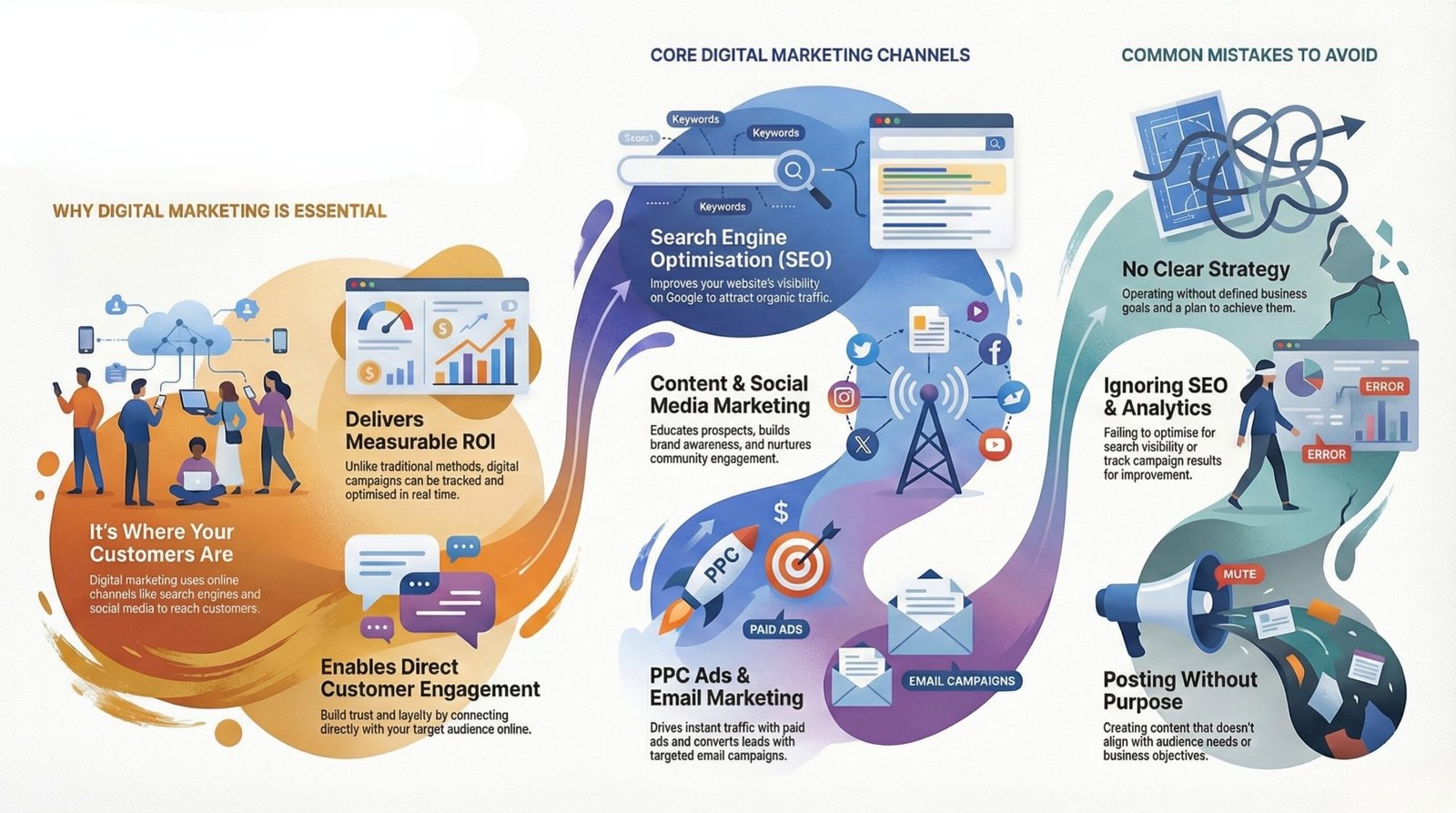
SEO focuses on improving your website’s visibility in search engines, particularly Google. When someone searches for a product or service you offer, SEO helps ensure your business appears organically rather than relying on paid ads alone.
What makes SEO especially powerful is intent. People using search engines are actively looking for solutions, which means SEO traffic is often highly qualified. While it takes time to build, SEO delivers long-term visibility and credibility that few other channels can match.
Content Marketing
Content marketing is the bridge between visibility and trust. Blogs, guides, videos, and case studies educate your audience rather than pushing sales messages. This positions your brand as a helpful authority instead of just another option.
For businesses with longer sales cycles, content marketing plays a critical role. It answers questions, addresses objections, and nurtures prospects until they’re ready to buy. Over time, strong content becomes a powerful asset that fuels SEO, social media, and email marketing.
Social Media Marketing
Social media marketing helps businesses stay connected with their audience. While it may not always drive immediate sales, it plays a crucial role in brand awareness, engagement, and relationship building.
Social platforms allow businesses to humanize their brand, share insights, and remain visible in customers’ daily lives. When used strategically, social media also supports retargeting and lead generation efforts.
Pay-Per-Click Advertising (PPC)
PPC advertising provides instant visibility. Platforms like Google Ads and social media ads allow businesses to appear at the top of search results or in front of targeted audiences immediately.
This makes PPC ideal for promotions, launches, and fast lead generation. However, success depends on strategy. Without proper targeting, messaging, and landing pages, PPC can become expensive quickly.
Email Marketing
Email marketing remains one of the most effective digital channels for conversion and retention. It allows direct communication with prospects and customers, independent of algorithms or platform changes.
When done correctly, email marketing nurtures relationships over time, turning one-time visitors into long-term customers.
How Digital Marketing Creates Predictable Business Growth
One of the biggest misconceptions about marketing is that growth has to be unpredictable. Digital marketing challenges that idea by turning marketing into a system rather than a series of one-off efforts.
Everything begins with attracting the right audience through SEO, content, social media, or paid ads. Once visitors arrive, optimized websites and landing pages guide them toward meaningful actions, such as booking calls or requesting information. Behind the scenes, email sequences and retargeting campaigns nurture these leads until they’re ready to convert.
This system-based approach allows businesses to see where growth comes from and how to scale it. Instead of relying on luck or referrals alone, digital marketing gives businesses visibility into performance and the ability to improve continuously.
That’s why business growth marketing and digital strategy go hand in hand. Growth becomes intentional, measurable, and repeatable.
How to Build a Digital Marketing Strategy That Actually Works
A successful digital marketing strategy doesn’t start with platforms—it starts with clarity. Businesses need to define what success looks like before choosing tactics. Whether the goal is lead generation, sales, brand awareness, or retention, every decision should align with that objective.
Understanding your audience is equally critical. Knowing who they are, what they struggle with, and how they make decisions shapes messaging and channel selection. Without this insight, even well-funded campaigns fall flat.
Channel selection should be intentional. Not every business needs to be everywhere. The most effective strategies focus on the channels that align with both audience behavior and business strengths.
Content creation should always serve a purpose. Every blog, ad, or email should either educate, convert, or nurture. Random activity wastes time and resources.
Finally, tracking and optimization are non-negotiable. Data reveals what’s working and what needs improvement. Businesses that grow consistently are those that treat marketing as an evolving system, not a fixed plan.
Common Digital Marketing Mistakes That Hold Businesses Back
Many businesses struggle with digital marketing not because it doesn’t work, but because it’s approached incorrectly. One of the most common mistakes is operating without a clear strategy. Posting content randomly or running ads without direction rarely produces meaningful results.
Another frequent issue is ignoring SEO in favor of short-term wins. While paid campaigns can deliver fast results, SEO builds long-term visibility that compounds over time.
Failing to track performance is another major setback. Without data, businesses can’t optimize or scale what works. Decisions become emotional rather than strategic.
Finally, trying to do everything alone often leads to burnout. Digital marketing involves multiple disciplines, and expertise matters.
How a Digital Marketing Agency Helps Businesses Grow Faster
A professional digital marketing agency brings strategy, execution, and optimization together under one roof. Instead of learning through trial and error, businesses benefit from proven frameworks and experienced specialists.
Agencies provide clarity, consistency, and performance tracking, ensuring that every marketing effort supports real business goals. For many businesses, partnering with an agency isn’t an expense—it’s a growth accelerator that saves time and reduces costly mistakes.
Conclusion: Digital Marketing as the Foundation of Growth
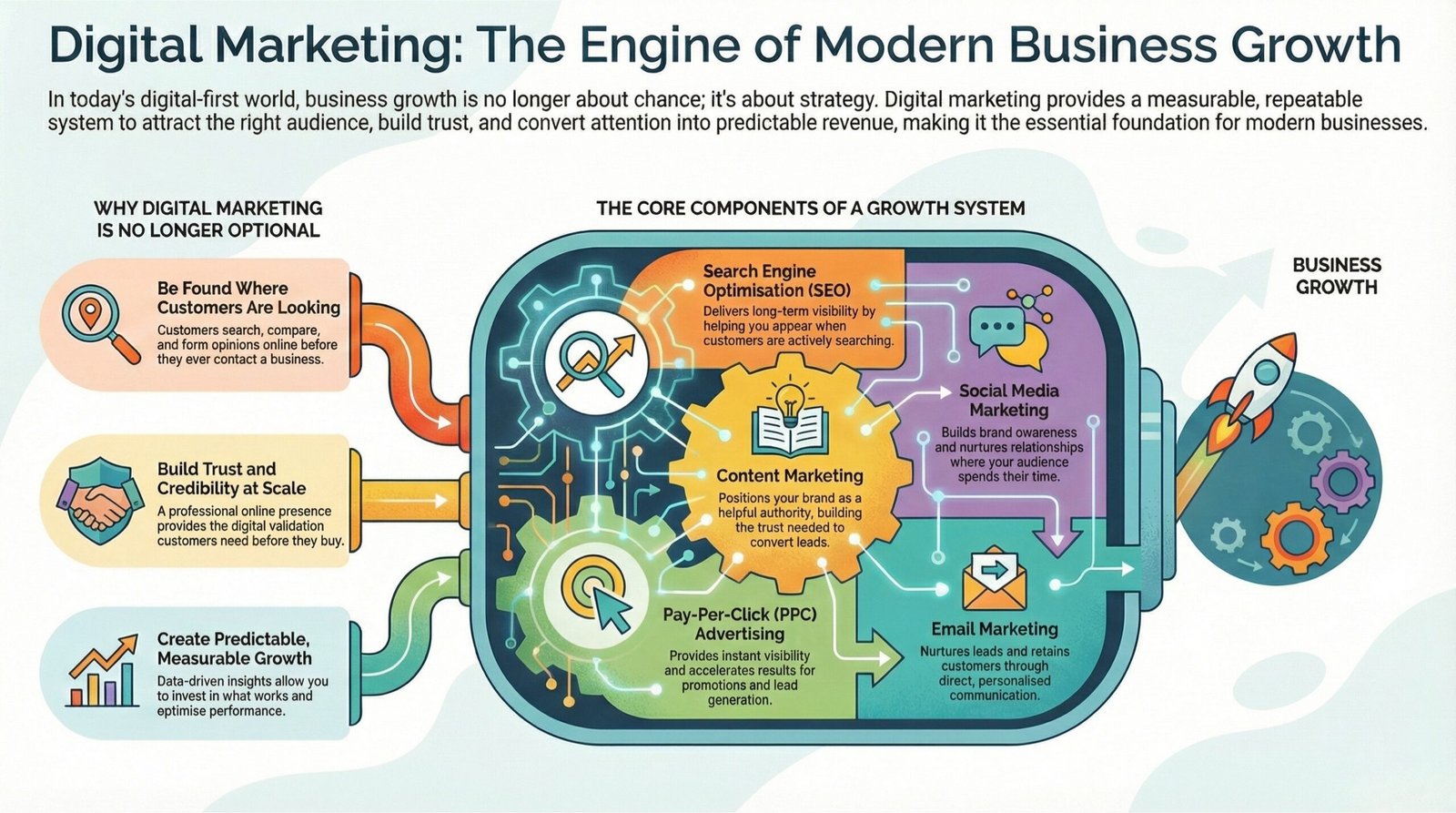
Digital marketing is no longer optional—it’s the foundation of sustainable business growth. Businesses that invest in visibility, trust, and strategy gain control over their growth instead of relying on chance.
Whether you’re building from the ground up or refining an existing approach, the right digital marketing strategy can transform how you attract, convert, and retain customers.
👉 Book a free discovery call to build a digital strategy tailored to your business goals.
FAQs
1. How long does digital marketing take to show results?
Paid advertising can produce quick results, while SEO and content marketing typically take a few months to gain traction.
2. Is digital marketing suitable for small businesses?
Yes. Digital marketing is scalable and cost-effective, making it ideal for small and growing businesses.
3. Which digital marketing channel is best?
The best channel depends on your audience, goals, and industry. A balanced strategy usually performs best.
4. Can I handle digital marketing in-house?
You can, but many businesses grow faster by working with experienced professionals.
5. How do I measure digital marketing success?
Success is measured through KPIs such as traffic, leads, conversions, and return on investment.